
Small Business Cyberthreats: Practical Protection
Review common small business cyberthreats, including data theft and unpatched systems, and where to focus your security planning.

· Last updated
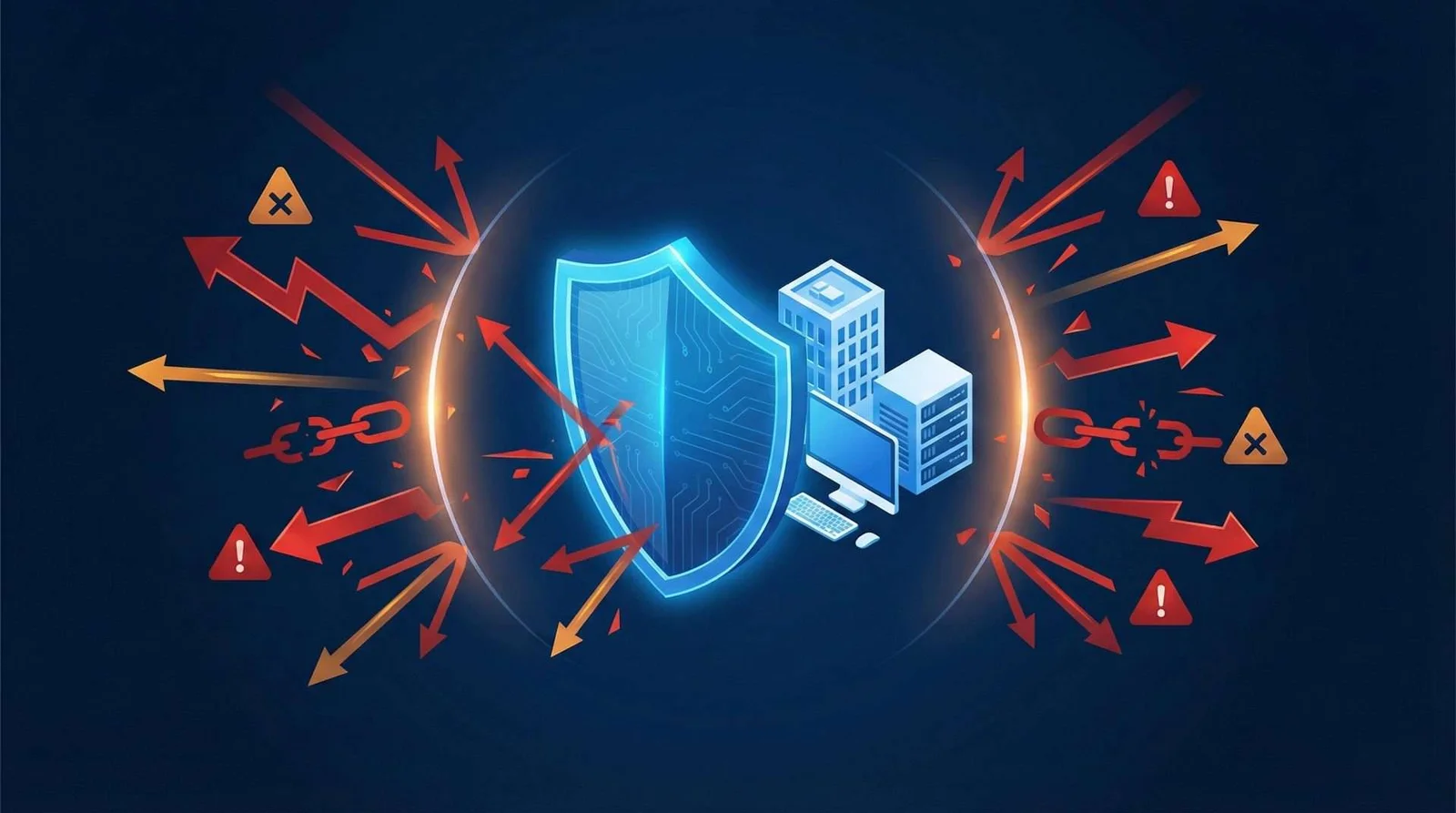
From our archive: Originally published March 24, 2026. Product features, pricing and availability mentioned in this article may have changed.
Key Takeaways
- Cyberthreats small business protection has become more urgent as attackers shift from ransomware to data theft and extortion, stealing files and threatening to publish them unless paid.
- Unpatched devices remain one of the most exploited entry points. A single outdated piece of equipment can give attackers access to dozens of businesses at once.
- Virtual servers are an increasingly common target; a successful attack can cause rapid, widespread disruption to your entire IT environment.
- Modern attackers use legitimate Windows tools to hide their activity, making them harder for standard security software to detect.
- The strongest defenses focus on the basics done well: patching, monitoring, visibility across all devices, and a clear incident response plan.
Cyberthreats Small Business Protection: How to Stay One Step Ahead
Cyberthreats small business protection requires a new approach. Today’s cybercriminals are no longer just causing chaos. They’re organized, patient, and highly targeted. From data theft and extortion to attacks through unpatched devices, the threats facing small businesses in Northeast Ohio are more refined than ever. The good news: the right preparation keeps you one step ahead.
There was a time when cyberattacks felt like something that happened to big corporations or government agencies. Not anymore.
Today’s cybercriminals specifically target small businesses, because small businesses often have valuable data and weaker defenses than large enterprises. And the tactics they’re using have evolved significantly in just the last few years.
Understanding what’s changed is the first and most important step toward protecting your business. Here’s what we’re seeing on the front lines of cybersecurity for small businesses in Canton, Akron, and Cleveland, and what you can do about it.
How Cyberthreats Have Changed for Small Businesses
The old model of cybercrime was blunt. Attackers would lock your systems with ransomware, demand payment, and hope you’d pay to get your data back. It was disruptive, but the goal was straightforward.
Today’s attackers are more sophisticated. They take their time. They study your systems. They look for the quietest way in, the most valuable data, and the point of maximum leverage. Then they strike, and the consequences can be far more damaging than a simple lockout.
For small businesses without dedicated IT security staff, this shift is significant. The threats are harder to spot, harder to stop, and harder to recover from when they succeed.
4 Refined Cyberthreats Every Northeast Ohio Business Must Know
1. Data Theft and Extortion: The New Ransomware
Traditional ransomware locked your files. The new approach is more insidious. Attackers quietly copy your data, financial records, customer details, employee information, and walk out the door without triggering any alarms. Then they contact you with a demand.
Pay up, or we release everything.
With privacy regulations tightening at both state and federal levels, the threat of a public data leak carries enormous consequences: regulatory fines, legal liability, and lasting reputational damage. That pressure is exactly what attackers are counting on.
2. Attacks Through Unpatched Devices
Every device on your network that hasn’t been updated is a potential entry point. This includes equipment you might not think of as a security risk: the router connecting your office to the internet, the file sharing appliance in the back room, the old workstation that “still works fine.”
When manufacturers stop releasing security patches for a device, known vulnerabilities stay open indefinitely. Attackers catalog these vulnerabilities and scan for unpatched devices automatically. A single outdated piece of equipment has, in documented cases, provided attackers with simultaneous access to dozens of businesses on the same network infrastructure.
3. Virtual Server Attacks
Many businesses run their IT infrastructure on virtual servers: systems that host applications, manage files, and keep day-to-day operations running. Because these servers are central to everything, they’re a high-value target.
If an attacker gains access to your virtual server environment, they can potentially affect every device and application that depends on it, simultaneously. The recovery time from this type of attack can be measured in days, not hours.
4. Living Off the Land: Attacks That Hide in Plain Sight
This technique is called “living off the land,” and it’s one of the more difficult threats to defend against with traditional security tools. Instead of introducing suspicious software that might trigger an alert, attackers use built-in Windows utilities, the same tools your IT team uses for legitimate tasks, to move through your systems, gather information, and execute their plan.
Because these tools are expected to be running, standard antivirus software often doesn’t flag them. Detecting this kind of activity requires behavioral monitoring: watching for unusual patterns in normal-looking activity, not just scanning for known malware signatures.
Cyberthreats Small Business Protection: What Actually Works
The good news is that the most effective defenses against these refined threats aren’t exotic or expensive. They’re the fundamentals, done consistently and done well.
- Keep everything patched and updated. Every device on your network, computers, routers, firewalls, file sharing tools, needs to receive and apply security updates. End-of-life devices that no longer receive patches should be replaced.
- Get visibility across all devices. You can’t defend what you can’t see. A managed IT provider can deploy monitoring tools that show what's happening on your computers and servers and flag unusual behavior early.
- Use behavioral monitoring, not just antivirus. Standard antivirus catches known threats. Behavioral monitoring catches unusual activity, even when attackers are using legitimate tools. For small businesses, this level of protection is now accessible and affordable through a managed security partner.
- Segment your network. If an attacker gets into one part of your network, segmentation limits how far they can move. Keeping critical systems, servers, financial applications, sensitive data stores, isolated from general office devices dramatically reduces the blast radius of a breach.
- Train your team regularly. Many attacks begin with a phishing email or a social engineering call. Staff who know what to look for are one of your strongest lines of defense. Regular, short training sessions are more effective than annual tick-box exercises.
Why Every Small Business Needs an Incident Response Plan
No security setup is perfect. The question isn't just how to prevent an attack. It's also what to do if one succeeds.
An incident response plan answers that question in advance. It defines who does what, who gets called first, how systems get isolated, how data gets recovered, and how customers and regulators get notified if required. Having that clarity in a moment of crisis dramatically reduces the chaos, and the cost.
For small businesses in Northeast Ohio, building this plan doesn’t have to be a major project. A good managed IT provider can help you create a practical, right-sized plan that fits your business, without the complexity designed for enterprise organizations.
Cyberthreats are getting more refined. But your defenses can keep pace, with the right preparation and the right people supporting you.
Find Out If Your Business Is Ready for Today's Cyberthreats
The threat landscape has changed, and your defenses should reflect that. We can help you get clear fast, from a second opinion on your current security setup to help building an incident response plan or a plain look at where your biggest risks are.
Cyber Shift serves small businesses across Canton, Akron, and Cleveland. We make cybersecurity practical, affordable, and local.
- Contact us online: cybershifttech.com/contact
- Email us: info@cybershift.com
- Call or text: 330-353-8420
No pressure. No jargon. Just a straight conversation about where you stand, and what, if anything, needs to change.
About the Author: John Wheeler is a managed IT and Microsoft 365 specialist at Cyber Shift, a trusted IT provider serving small businesses across Northeast Ohio, including Canton, Akron, and Cleveland. He helps local teams get more from the tools they already use, with a focus on practical configuration and day-to-day productivity.
Frequently Asked Questions About Cyberthreats and Small Business Protection
What are the biggest cyberthreats facing small businesses today?
The most significant cyberthreats for small businesses today include data theft and extortion (where attackers steal files and threaten to publish them), attacks through unpatched devices, virtual server breaches, and “living off the land” attacks that use legitimate system tools to avoid detection. These threats are more targeted and harder to detect than traditional ransomware.
What is data extortion and how is it different from ransomware?
Traditional ransomware encrypts your files and demands payment to unlock them. Data extortion skips the lockout: attackers steal copies of your sensitive data and threaten to publish it publicly unless you pay. Because privacy laws impose significant penalties for data exposure, this threat puts enormous pressure on businesses even if their systems are still fully operational.
How do unpatched devices put my business at risk?
Unpatched devices have known security vulnerabilities that manufacturers have stopped fixing. Attackers scan networks for these devices automatically and exploit the vulnerabilities to gain access. A single unpatched router, file sharing tool, or end-of-life computer can give an attacker a foothold into your entire network, and potentially into other businesses on the same infrastructure.
What is a “living off the land” cyberattack?
A living off the land attack uses legitimate tools already built into Windows or other operating systems, like PowerShell or Windows Management Instrumentation, to carry out malicious activity. Because these tools are expected to run on any Windows system, standard antivirus software often doesn’t flag them. Detecting these attacks requires behavioral monitoring that looks for unusual patterns in otherwise normal-looking activity.
Does my small business need an incident response plan?
Yes. An incident response plan defines what your business does in the first hours of a cyberattack: who gets called, how systems get isolated, how data gets recovered, and what notifications are required by law. Businesses with a documented plan recover faster and at lower cost than those without one. A managed IT provider can help you build a practical, right-sized plan without enterprise-level complexity.
How can a managed IT provider help protect my business from cyberthreats?
A managed IT provider can deploy monitoring tools across all your devices, manage patching and updates to close known vulnerabilities, implement behavioral security tools that detect unusual activity, help build an incident response plan, and train your staff on phishing and social engineering threats. For Northeast Ohio businesses, working with a local MSP like Cyber Shift means faster response times and security guidance tailored to your industry and risk profile.