
Build a Business Continuity Plan Around Real Work
Identify essential work, recovery priorities and responsible people before an outage. Turn a continuity plan into a practical business exercise.

· Last updated
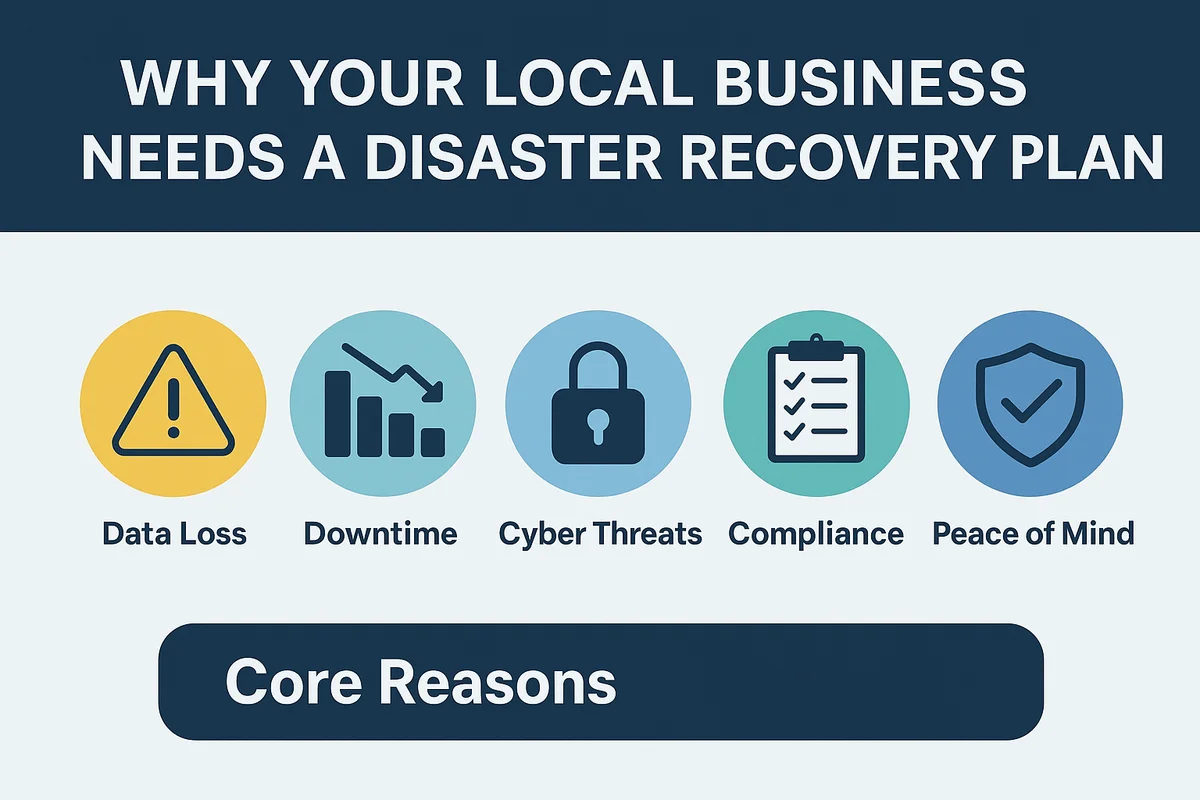
A business continuity plan says how your essential work keeps going during a disruption and how you get back to normal. Start with one activity, like taking orders or running payroll, then list the people, systems, suppliers and decisions it depends on. A backup plan alone doesn't cover that.
Key Takeaways
- Start with essential business activities, not a list of equipment.
- Document dependencies, temporary workarounds and decision owners.
- Test the plan through a realistic discussion and update what is missing.
This guide was originally published on 2020-05-25. Its guidance was substantially updated on October 2, 2026.
Choose one essential activity
Taking customer orders, scheduling service and paying employees can depend on different systems. Pick one activity and record what it requires, how an interruption affects the business and whether a temporary manual process is practical.
Ask how much information you could reasonably recreate and how long that activity could remain unavailable. These are business decisions that help shape a technical recovery plan; a backup product should not make them implicitly on your behalf.
Account for the dependencies
List the application provider, internet connection, sign-in process and key staff involved. A restored server may not make the activity usable if the provider account is inaccessible or the person who knows the process is away.
Record a usable contact method for each decision-maker. Keep an appropriately protected copy of essential instructions available through an agreed alternative if the usual system is unavailable.
Try the plan before depending on it
Ready Business offers preparedness planning resources. Use them as a starting point, then run a discussion based on your own business: the office connection is unavailable, a key employee cannot work or a critical application has failed.
Walk through the first decisions and the work that must continue. Note unclear ownership, unavailable contacts and untested assumptions. Give each gap an owner and a follow-up date rather than treating a completed document as proof that recovery will work.
Technical restoration and business continuity support each other. They should share priorities, while still recognizing the staffing, communication and supplier issues that a technology backup alone cannot address.
Talk through the next step
Cyber Shift is led by 22 years of IT experience. Book a 30-minute call with our North Canton team about your business continuity plan.
Reference: official guidance.